



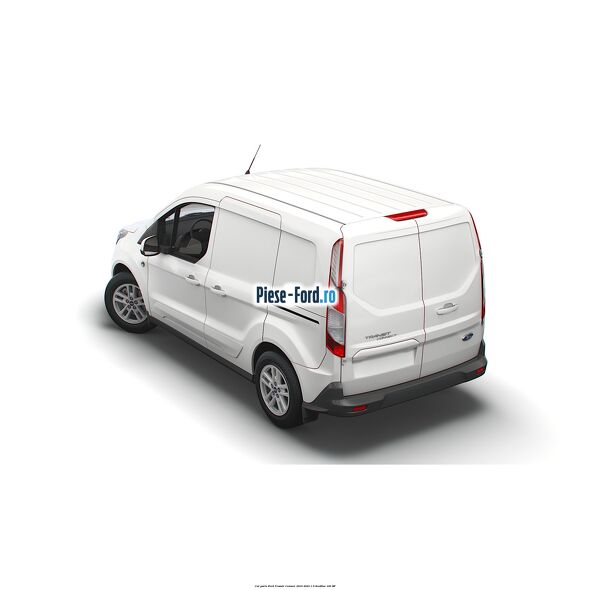


Ford TRANSIT CONNECT Parts | 2019 - 2023 | EcoBlue EcoBoost #AOK4K8K5K
This is the latest generation of the small pickup truck Ford Transit Connect. First introduced in 2013 and then significantly updated with a facelift in 2018, it remains an extremely competitive and popular choice, even against the newest rivals. Ford Transit Connect - 2018 facelift model Building on where the previous generation left off, it offers plenty of practicality and a remarkably car-like driving experience. Selling in large numbers, it usually finds more buyers than any other small van in Europe. Whats new for 2020? With a relatively recent facelift in 2018, we dont expect major changes for the Transit Connect in 2020. However, there is a new Volkswagen Caddy model, to which Ford might respond in some way. Plenty of choice In addition to coming in two body lengths - short wheelbase (SWB) L1 and long wheelbase (LWB) L2 - the Transit Custom is sold as a panel van, a double cab-in-van (DCiV) with a second row of seats, and a Kombi passenger carrier, although the Kombi no longer appears on the UK price list. There is also a Tourneo Connect passenger carrier, but this counts as a car. Ford Transit Connect - short wheelbase L1 2013 At launch, there were three standard trim levels: Base (sometimes called Leader), Trend, and Limited, with a few fuel-saving Econetic variants. Following the 2018 facelift, the range expanded to four trim levels, with the addition of the top Sport. We have a long-term test of one of these if you want to learn more about how they will live. In 2019, Ford-approved customizer MS-RT launched its facelifted version of the Transit Connect, based on 120 HP; already available to order through a select number of Ford dealers, the MS-RT Transit Connect is set to join the full Ford order system in 2020. Diesel and diesel engines are available in the usual range, and after the facelift, an eight-speed automatic transmission was added as an option. Ford Transit Connect - long wheelbase L2 2013, Both body lengths can fit two euro pallets inside, while the L1 will take items up to 3.0 meters long and the L2 up to 3.4 meters long, thanks to an intelligent hatch system and a folding passenger seat that allows long and thin items to pass through the partition wall. There is a variety of load anchoring options and doors. See our dedicated page for Ford Transit Connect dimensions. Ford Transit Connect 2018 facelift Although not radically different on the outside, Ford for the 2018 facelift not only updated the Transit Connect cabin interior but also improved the engines and transmissions. If you look closely at the revised model illustrated below, youll notice the new grille design, lower front bumper, and thin-line headlights - all changed in an effort to make this van look more like the latest Ford cars. Inside, the revised dashboard also features a more modern look, complemented by the option of a much more up-to-date infotainment system, including a larger and more easily accessible touchscreen. The materials are of higher quality and are supposed to be more resistant to wear. The biggest changes, however, are under the skin, with a new 1.5-liter EcoBlue turbodiesel engine replacing the old 1.6-liter TDCi, promising real-world fuel economy (already a strong point of the Transit Connect) and less noise. The existing 1.0-liter EcoBoost turbo petrol engine has been modified to improve its fuel economy and now features cylinder deactivation technology. At the same time, Ford has switched to a standard six-speed manual gearbox, replacing the five-speed that was initially fitted to the less powerful versions - something youll still find in most entry-level rivals. The eight-speed automatic option is also a rare treat for small van owners and operators. Ford Transit Connect rivals The closest rivals to the Transit Connect in the sales charts are usually the Peugeot Partner and Citroen Berlingo - which are closely related to each other. The latest versions of this French pairing, on sale since early 2019, are very impressive vans, with high payload ratings, good fuel economy, and the promise of clever technical features (although this promise is not always fulfilled). The 2018 Vauxhall Combo Cargo is also part of this family, which will gain the Toyota Proace City as another member when it goes on sale in 2020. Potential Transit Connect customers will also want to consider the Volkswagen Caddy (which is good to drive and efficient); the aging Renault Kangoo is cost-effective, while the Fiat Doblo Cargo has a useful load capacity and is available in a high-roof variant, which is unusual in the small van sector. Ford Transit Connect diesel engines At launch in 2013, this generation of Transit Connect was available with a trio of 1.6-liter TDCI turbodiesel engines offering 75 HP, 95 HP, and 115 HP. At the end of 2018, these were gradually phased out in favor of newer 1.5-liter EcoBlue turbo diesel engines, delivering 75 HP, 100 HP, or 120 HP. At the same time, Ford dropped the basic five-speed manual gearbox, offering Transit Connect six speeds across the entire range - contributing to smoother and quieter movement. Regardless of size, the diesel engines weve driven have proven surprisingly smooth, refined, and quiet. There is enough offer to easily carry the test vans half-loaded (including two front occupants) thanks to a decent wave of torque. Also, the steering feels more assured with the heavier diesel compared to the lighter petrol models, making them more suitable for faster A and B road use. How is the Transit Connect 1.0-liter EcoBoost? If you prefer petrol, Ford has chosen to fit this van with the 1.0-liter EcoBoost turbo engine - a 100 HP three-cylinder unit that is incredibly light and small, while promising impressive fuel economy. Although an intriguing idea, after driving it loaded with about half of the maximum payload, we would suggest it is more suitable for city centers than open road driving, as it lacks the torque associated with a diesel engine. Petrol power is not particularly popular in the European van market, but if you make shorter trips, especially around town, you might find it a good solution. With a light load, this is a fun engine to drive, and the latest version (following the 2018 facelift) even has cylinder deactivation technology to save more fuel. This means that when not driven hard, the small three-cylinder petrol is capable of running on just two cylinders, instantly returning to full completion as soon as more power is needed. Ford Transit Connect handling and comfort On the road, the Connect feels very car-like, and by that, it means it is very successful Five and six-speed manual gearboxes are functional, and the driving position is very good for a van. Ford Transit Connect review - six-speed manual gearbox. However, more than that, the steering is sharp and responsive, you always feel confident that there is plenty of grip, and the suspension does a good job of controlling body roll in corners. Add the completely acceptable ride quality and low noise levels inside the already mentioned, and you have a composed, friendly van that could make even long-distance trips perfectly pleasant. Eight-speed automatic As part of the 2018 update, Ford added an eight-speed automatic transmission option to the Transit Connect, which is available as an option on some 100 HP and 120 HP diesel models. Ford Transit Connect cabin and interior Car-like cabin, improved over time The latest infotainment technology - but you have to pay extra Load-through bulkhead option Ford has always kept the interior cabin design of the Transit Connect close to the look youll find in its passenger cars. Compared to a lot of rival vans, this made it feel very modern when it was new in 2013. As time has passed, its hard not to see these earlier interiors as a button-fest - there are so many on the center console that its difficult to know where to start when looking for an unfamiliar control. And although youll probably get used to it if you drive it every day, it started to feel its age - even where more sophisticated infotainment and sat-nav systems were fitted, as they used small, set-back screens. 2018 interior facelift Fortunately, the 2019 facelift brought the Transit Connect back into the fold - in another move that copies the look of the latest Ford passenger cars inside. The materials are of better quality, with a wider range of surface finishes, and now you can get an iPad-style infotainment system with a 6.0-inch touchscreen and Fords latest Sync 3 operating system with voice control - although youll have to pay more for it, even in the sport range. Sync 3 is not as friendly as some rival systems, but it is now easier to use thanks to the improved screen. Plus, you can always opt to run the built-in Apple CarPlay or Android Auto that comes with it via your smartphone if you prefer that. Good driving position, some visibility concerns The fundamental driving position is good, with plenty of adjustment on the seats (four-way on base models, eight-way on all others) and on the steering wheel. FordPass Connect Following the facelift, the Transit Connect became the first Ford van to be offered with the FordPass Connect modem system. When activated (which involves a one-time fee and then a subscription), it uses a 4G data connection to provide mobile Wi-Fi for up to 10 devices, as well as to unlock a range of additional features via the FordPass Pro app. FordPass Pro works with fleets of up to five vans, although you dont need to have a fleet to use its main features - which include a clear indicator showing if the van is locked or unlocked, instant notifications about maintenance issues or faults, and the option to check the status of fluid levels, tire pressures, and similar things worth keeping an eye on. You also use the app to not only locate the van youre driving - handy for remembering where you parked it, as well as checking that its still there, but also see all the other vans in your fleet on the same map screen. So, youll be able to check if your partners are where they should be and know which one is closest if you need a second pair of hands for something urgent. More features will be rolled out over time, while for larger fleets, Ford also has a new set of data tools and software. Ford Transit Connect standard safety equipment Base vehicles benefit from ABS, electronic stability control (ESC), electronic brake force distribution, drivers airbag, and full steel bulkhead. Trend models add front fog lights and a heated windshield. Limited models add automatic lights and wipers, cruise control, and rear parking sensors. Ford Transit Connect optional active safety systems The Connect was the first van in its class to offer a low-speed emergency braking system (AEB) for city driving. While this is now standard for the entire VW Caddy range, it remains optional on Ford. Besides this, you can also specify lane-keeping warning and assistance systems, blind spot monitors, side wind stabilization, front parking sensors, and a rearview parking camera. Up to six airbags are also available. Ford Transit Connect security In terms of security, all models feature remote locking, power locks, and immobilizer, but only Limited and Sport include a standard-fit alarm. You can also have the option of configurable door locking, meaning you can unlock the cabin without unlocking the load area and vice versa. Newer models compatible with FordPass can be located via a smartphone app, which adds some peace of mind. You can also check the van is locked in the same software and even lock and unlock it remotely as well. However, as always, our advice is to never leave anything valuable in the van if you can avoid it. Not much will stop a determined thief from cutting inside using power tools.
2026