

The product has been added to Favorites!
The product has been removed from Favorites!

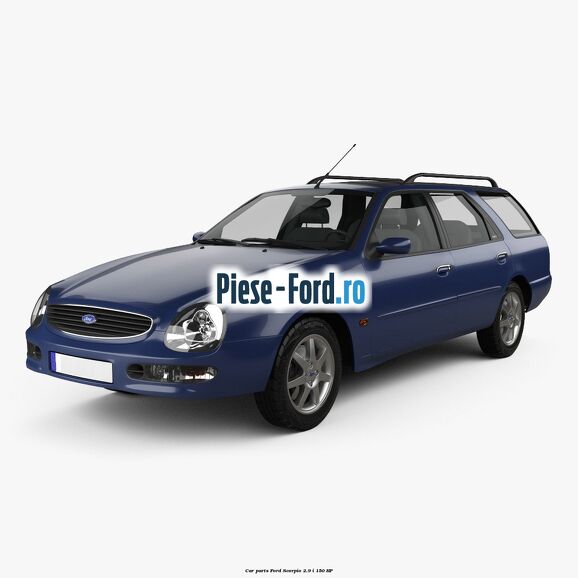
Car parts Ford Scorpio 1995-1999

Find spare parts for any FORD SCORPIO II (GFR, GGR) model on Piese-FORD.ro! Original quality spare parts for cars from the years 1994 - 1998, or MK2! #67K7K6O5K

Model SerialYear kW/HPCmcEngine Code Type

Original parts Ford Scorpio


More precisely, Ford Scorpio Mk2 was one of the most unusual executive offerings in recent years. Its style could not have been more different from the conservative look of the car it replaced, the dear old Granada. Certainly, it took both buyers and competitors in the boardroom sector by surprise. Whether this "mix for the nineties" was successful depends on who you talk to. Ford executives have always claimed that production was sold months in advance, but they have not always wanted to specify what the actual production level was. Below what Ford of Europe would have wanted, certainly. But market uncertainty is good news for the second-hand buyer. Regardless of what you think about the appearance, the Scorpio drives excellently, and the prices are tempting.

Ford Scorpio Mk2 Models covered: (2.0 8v sedan, Estate [Executive, Ghia] / 2.0 16v sedan, Estate [Executive, Ghia, Ultima] / 2.3 16v sedan, Estate [Ghia, Ghia X, Ultima] / Granada 2.9 6cy 12v Sedan, Estate [Executive, Ghia, Ultima] / Granada 2.9 6cy 24v Saloon, Estate [Executive, Ghia, Ultima] / 2.5 TD Sedan, Estate [Executive, Ghia, Ghia X, Ultima])

Scorpio succeeded the popular Granada as Fords executive flagship, with strengths in space, tough engineering, and reasonable running costs. However, its design was controversial, and despite the sound mechanics under the hood, the new Americanized style and the controversial wide-mouth grille proved too much for European buyers and signaled the beginning of the end.

History

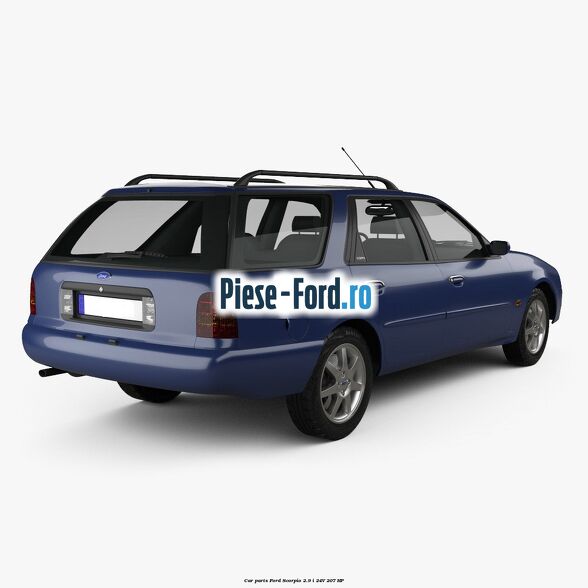
Scorpio Mk2 was introduced in October 1994, replacing the much-loved Granada as Fords executive flagship. Its unusual appearance caused an instant uproar, which was not helped by the fact that no one at Ford acknowledged overall responsibility for its creation. By the way, dont confuse the new Scorpio look with the Scorpio specification levels available for the top versions of the previous Granada. Early models were offered with a choice of four main gasoline power units - a 2.0-liter "four" - offered in either 8v or 16v form - as well as 12v and 24v versions of the 2.9-liter V6. There was also a 2.5-liter turbo diesel. Executive, Ghia, and Ultima levels were offered. In August 1996, handling was improved, and rationalization streamlined. Trim levels were now known as Ghia, Ghia X, and Ultima, but more significantly, a new 2.3-liter 16v engine (developed, like the 24v V6, by Cosworth) was added to the range. Ford fiercely defended those unusual aspects throughout the cars life but bowed to public pressure in early 1998 by reducing the amount of chrome around the body. You will notice these rare cars by their front grille surround, darkened headlights, and restyled tail lights of the sedan. Scorpio was gradually phased out in the second half of 1998.

The new design masked many improvements - including better handling and a more controlled ride. Changing buying patterns in the executive car market ultimately killed the Scorpio.
Unfortunately, the Scorpio was never crash-tested by Euro NCAP, but its rigid body feels tough enough to protect passengers in moderate impact conditions and withstand minor thresholds. They are also not particularly important in terms of thieves priorities - which is probably an indication of how cheeky these headlights and grille are - although the immobilizer and alarm should act as a decent deterrent.
 
Scorpio is suitable for highway cruising - capable of staying at 70 km/h for the length and breadth of the country - but it is not as competent in the city and around it, and although the boot offers enough loading space, the salon does not offer the same rear versatility as the more spacious Estate model. The excellent level of equipment is also a bonus, with self-leveling rear suspension, electric mirrors, and lumbar adjustment.
 
Unfortunately, the second-generation Scorpio was never crash-tested by Euro NCAP, but its rigid body feels tough enough to protect passengers in moderate impact conditions and withstand minor thresholds. They are also not particularly important in terms of thieves priorities - which is probably an indication of how cheeky these headlights and grille are - although the immobilizer and alarm should act as a decent deterrent.
 
The driving position is comfortable, the seats have multiple adjustments, and there is a good view of the road. Although the center console does not have the solid look of superior German rivals, the rest of the interior design features are pleasant and durable. The strong dials and buttons are conveniently placed and easy to use, making the drivers seat the best place to view the Scorpio; you cant see the style from there.
 
Its just a shame that everyone else on the road can.
 
Although dated, the cabin still has some luxuries and is spacious, which is certainly the ace card of the Scorpio. There are also quality accessories and an extremely smooth ride. The seats are like armchairs, and the upper models are fully adjustable - providing enough back support on longer journeys and an excellent view of the road. Rear seat comfort is also extraordinary, as the airy cabin and long wheelbase allow for plenty of head and legroom.
 
Ford maintenance is not too expensive - even on the complex 2.9i 24v engine - while fuel economy and insurance are fair. Parts are quite expensive to replace, so inspect the Scorpio before buying, as cutting corners will cost you in the long run. Also, depreciation will steadily erode values, but unfortunately, very few cars escape this degradation.
 
Scorpio should not create too many problems if properly maintained and regularly serviced, but few garages have special expertise in fixing the Scorpio, although it may be worth looking online for owner clubs and enthusiast websites, which might offer practical advice in case of problems. Minor reported issues include, in particular, trim defects and faulty electrics.
 
The last of the rear-wheel-drive Scorpio engines had no less than six engines during its short lifespan: 2.0i 8-valve, 2.0i 16-valve, 2.3i 16-valve, 2.5 turbo-diesel, 2.9i 12-valve, and Cosworth 2.9i 24 valve. Despite the radical exterior restoration, a new interior, improved suspension, and chassis, 2.3 is the only new engine; the rest were carried over and revised from the previous range.
 
2.3i 16v is faster and smoother than the tougher but willing old 2.0i unit, but the Cosworth 2.9i 24v cravings must be the drivers choice, as it can really move when needed, backed by over 200 HP and a top speed of 225 km/h.
 
Better body control and grip than on previous cars, providing extra confidence in corners and safer driving in adverse conditions. The steering is competent and quite direct, but it is best suited for highway transport.
 
Spare parts
On the 1995 Ford Scorpio 2.0 8V. As you would expect, parts are abundant and relatively cheap. Front brakes are around 130 euros, a complete exhaust about 620 euros (including Catalyzer). A headlight ranges from about 145-240 euros, and a windshield is around 389 euros.
 
Overall
In the final analysis, Fords flagship is certainly good enough to win buyers on its own merits. If you doubt that, try a Scorpio, say a Rover 800, and youll realize that Ford produces a better product.
 
Even against more illustrious competition, the car still has a significant amount to offer, especially if all you need is comfort, refinement, and pace. And that style? Well, its a matter of personal opinion, of course. For what its worth, you have to admire Ford for having the courage to produce such a radical design.
 

Ford SCORPIO Parts | 1994 - 1998 | DOHC V6 Cosworth VM #67K7K6O5K


en
2026-02-26T00:36:15+00:00
Ford SCORPIO Parts | 1994 - 1998 | DOHC V6 Cosworth VM #67K7K6O5K
Car parts Ford Scorpio 1995-1999 #67K7K6O5K
More precisely, Ford Scorpio Mk2 was one of the most unusual executive offerings in recent years. Its style could not have been more different from the conservative look of the car it replaced, the dear old Granada. Certainly, it took both buyers and competitors in the boardroom sector by surprise. Whether this "mix for the nineties" was successful depends on who you talk to. Ford executives have always claimed that production was sold months in advance, but they have not always wanted to specify what the actual production level was. Below what Ford of Europe would have wanted, certainly. But market uncertainty is good news for the second-hand buyer. Regardless of what you think about the appearance, the Scorpio drives excellently, and the prices are tempting. Ford Scorpio Mk2 Models covered: (2.0 8v sedan, Estate [Executive, Ghia] / 2.0 16v sedan, Estate [Executive, Ghia, Ultima] / 2.3 16v sedan, Estate [Ghia, Ghia X, Ultima] / Granada 2.9 6cy 12v Sedan, Estate [Executive, Ghia, Ultima] / Granada 2.9 6cy 24v Saloon, Estate [Executive, Ghia, Ultima] / 2.5 TD Sedan, Estate [Executive, Ghia, Ghia X, Ultima]) Scorpio succeeded the popular Granada as Fords executive flagship, with strengths in space, tough engineering, and reasonable running costs. However, its design was controversial, and despite the sound mechanics under the hood, the new Americanized style and the controversial wide-mouth grille proved too much for European buyers and signaled the beginning of the end. History Scorpio Mk2 was introduced in October 1994, replacing the much-loved Granada as Fords executive flagship. Its unusual appearance caused an instant uproar, which was not helped by the fact that no one at Ford acknowledged overall responsibility for its creation. By the way, dont confuse the new Scorpio look with the Scorpio specification levels available for the top versions of the previous Granada. Early models were offered with a choice of four main gasoline power units - a 2.0-liter "four" - offered in either 8v or 16v form - as well as 12v and 24v versions of the 2.9-liter V6. There was also a 2.5-liter turbo diesel. Executive, Ghia, and Ultima levels were offered. In August 1996, handling was improved, and rationalization streamlined. Trim levels were now known as Ghia, Ghia X, and Ultima, but more significantly, a new 2.3-liter 16v engine (developed, like the 24v V6, by Cosworth) was added to the range. Ford fiercely defended those unusual aspects throughout the cars life but bowed to public pressure in early 1998 by reducing the amount of chrome around the body. You will notice these rare cars by their front grille surround, darkened headlights, and restyled tail lights of the sedan. Scorpio was gradually phased out in the second half of 1998. The new design masked many improvements - including better handling and a more controlled ride. Changing buying patterns in the executive car market ultimately killed the Scorpio. Unfortunately, the Scorpio was never crash-tested by Euro NCAP, but its rigid body feels tough enough to protect passengers in moderate impact conditions and withstand minor thresholds. They are also not particularly important in terms of thieves priorities - which is probably an indication of how cheeky these headlights and grille are - although the immobilizer and alarm should act as a decent deterrent.   Scorpio is suitable for highway cruising - capable of staying at 70 km/h for the length and breadth of the country - but it is not as competent in the city and around it, and although the boot offers enough loading space, the salon does not offer the same rear versatility as the more spacious Estate model. The excellent level of equipment is also a bonus, with self-leveling rear suspension, electric mirrors, and lumbar adjustment.   Unfortunately, the second-generation Scorpio was never crash-tested by Euro NCAP, but its rigid body feels tough enough to protect passengers in moderate impact conditions and withstand minor thresholds. They are also not particularly important in terms of thieves priorities - which is probably an indication of how cheeky these headlights and grille are - although the immobilizer and alarm should act as a decent deterrent.   The driving position is comfortable, the seats have multiple adjustments, and there is a good view of the road. Although the center console does not have the solid look of superior German rivals, the rest of the interior design features are pleasant and durable. The strong dials and buttons are conveniently placed and easy to use, making the drivers seat the best place to view the Scorpio; you cant see the style from there.   Its just a shame that everyone else on the road can.   Although dated, the cabin still has some luxuries and is spacious, which is certainly the ace card of the Scorpio. There are also quality accessories and an extremely smooth ride. The seats are like armchairs, and the upper models are fully adjustable - providing enough back support on longer journeys and an excellent view of the road. Rear seat comfort is also extraordinary, as the airy cabin and long wheelbase allow for plenty of head and legroom.   Ford maintenance is not too expensive - even on the complex 2.9i 24v engine - while fuel economy and insurance are fair. Parts are quite expensive to replace, so inspect the Scorpio before buying, as cutting corners will cost you in the long run. Also, depreciation will steadily erode values, but unfortunately, very few cars escape this degradation.   Scorpio should not create too many problems if properly maintained and regularly serviced, but few garages have special expertise in fixing the Scorpio, although it may be worth looking online for owner clubs and enthusiast websites, which might offer practical advice in case of problems. Minor reported issues include, in particular, trim defects and faulty electrics.   The last of the rear-wheel-drive Scorpio engines had no less than six engines during its short lifespan: 2.0i 8-valve, 2.0i 16-valve, 2.3i 16-valve, 2.5 turbo-diesel, 2.9i 12-valve, and Cosworth 2.9i 24 valve. Despite the radical exterior restoration, a new interior, improved suspension, and chassis, 2.3 is the only new engine; the rest were carried over and revised from the previous range.   2.3i 16v is faster and smoother than the tougher but willing old 2.0i unit, but the Cosworth 2.9i 24v cravings must be the drivers choice, as it can really move when needed, backed by over 200 HP and a top speed of 225 km/h.   Better body control and grip than on previous cars, providing extra confidence in corners and safer driving in adverse conditions. The steering is competent and quite direct, but it is best suited for highway transport.   Spare parts On the 1995 Ford Scorpio 2.0 8V. As you would expect, parts are abundant and relatively cheap. Front brakes are around 130 euros, a complete exhaust about 620 euros (including Catalyzer). A headlight ranges from about 145-240 euros, and a windshield is around 389 euros.   Overall In the final analysis, Fords flagship is certainly good enough to win buyers on its own merits. If you doubt that, try a Scorpio, say a Rover 800, and youll realize that Ford produces a better product.   Even against more illustrious competition, the car still has a significant amount to offer, especially if all you need is comfort, refinement, and pace. And that style? Well, its a matter of personal opinion, of course. For what its worth, you have to admire Ford for having the courage to produce such a radical design.  
2026

Accessories Ford Scorpio 1995-1999

Parts Catalog Ford Scorpio 1995-1999